
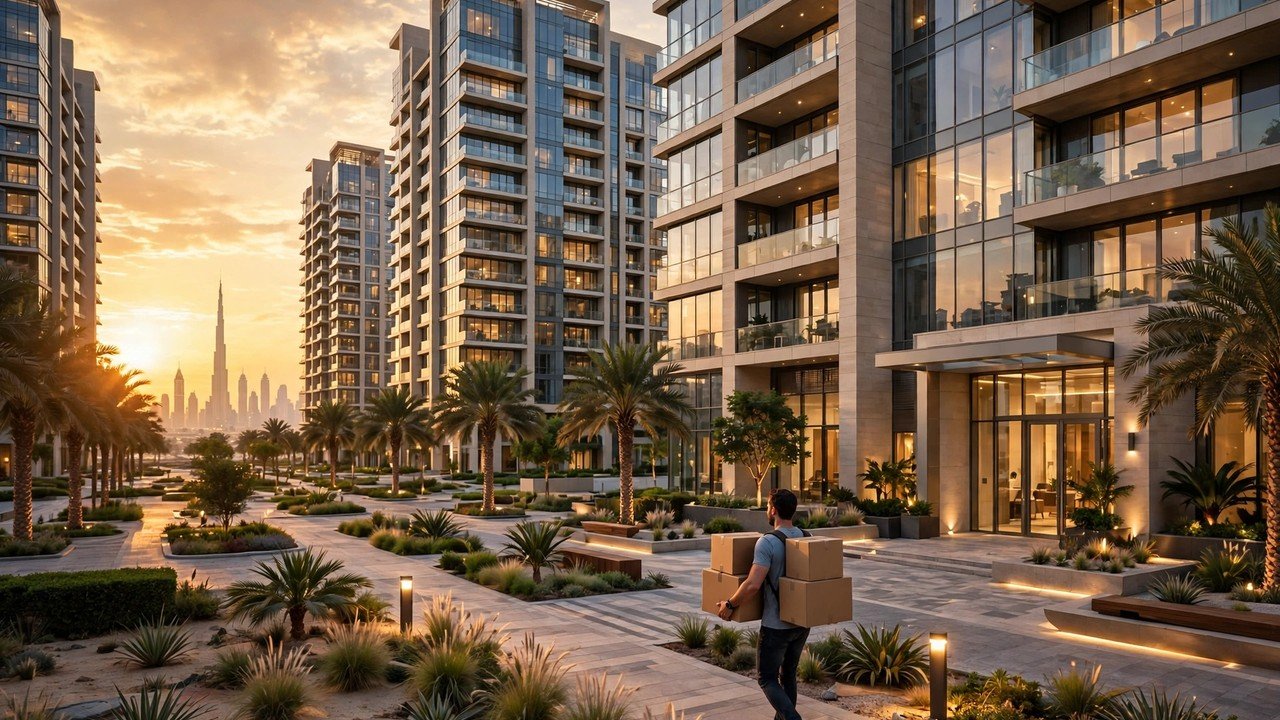
If you only read the headlines, you might think Dubai’s top-end market went quiet this summer. It did not. The Dubai luxury property market Q3 2026 was slower than the spring, but the year as a whole is still ahead of last year, the biggest deals kept coming, and Palm Jumeirah kept leading. For a buyer at this level, that combination matters more than any single quarter’s headline. Dubai luxury property market Q3 2026: the headline numbers Start with Knight Frank’s Q3 analysis. Dubai recorded 86 residential sales of US$10 million or more between July and September, worth AED 5.77 billion (US$1.57 billion). Thirteen of those deals were above US$25 million. The quarterly count was 34% below the 131 sales in the second quarter, and below the 103 in the same quarter last year. Put that in context, and the Dubai luxury property market Q3 2026 looks like a quieter summer inside a stronger year. Those 86 deals took the January–September total to 412 sales worth about US$6.67 billion, up from 357 deals in the same period of 2025. The monthly split fits the usual summer pattern: 36 deals in July, 32 in August and 18 in September. Palm Jumeirah still leads In the Dubai luxury property market Q3 2026, no area tells the story better than Palm Jumeirah. The island recorded 27 of the quarter’s US$10 million-plus sales, worth AED 2.01 billion — about 31% of the deals and 35% of their value. It also hosted the quarter’s largest transaction, a villa sale at AED 260 million, and five of the 13 deals above US$25 million. Knight Frank puts Palm Jumeirah at AED 4,083 per square foot after prices there eased 9.1% over 12 months, and describes the island as increasingly offering good value. When the city’s most famous address becomes more affordable per square foot, while still attracting buyers who want a permanent or holiday home rather than a quick flip, the market is becoming more selective — not weaker. Behind the Palm, Jumeirah Second recorded 10 sales, Emirates Hills seven, and Dubai Hills Estate and Jumeirah Golf Estates six each. Villas dominate, and the very top end keeps moving Villas made up 55 of the quarter’s 86 US$10 million-plus sales, about 64%. At this level, buyers are usually buying a home and a lifestyle — space, privacy, a garden and a waterfront or golf course setting — not just an asset. The ultra-prime end is even more telling for the Dubai luxury property market Q3 2026. The 13 deals above US$25 million were only about 15% of luxury sales by number, yet produced nearly 32% of the value. Their value grew through the quarter, from AED 376.1 million in July to AED 609.8 million in August and AED 849.5 million in September, when they made up about 52% of that month’s luxury sales value. A market where the biggest buyers keep spending is a market with depth. Savills’ Q3 report adds a wider lens: 669 transactions above AED 10 million (a much lower threshold than Knight Frank’s US$10 million, so the counts are not directly comparable), luxury apartment prices up 4% year on year, villas and townhouses up 3.6%, and rental transactions up 16% quarter on quarter. What the price dip really means For the Dubai luxury property market Q3 2026, prices across Dubai’s 10 prime neighbourhoods fell 5% between the second and third quarters — the first quarterly fall since 2020. Say that plainly, but also say what it is not: it is not a collapse. It is normalisation after record years, and it gives serious buyers room to negotiate. Developers are also being more selective, with only about 5,000 homes launched in the third quarter according to Savills, taking the 2026 total to about 50,000. Activity is concentrating in the best locations and homes, weaker pricing is being tested, and well-priced properties in proven communities keep selling. That is a maturing market, not a market in trouble. What this means for you First, for buyers in the Dubai luxury property market Q3 2026, start with the community, not the headline. Compare any asking price with what your budget actually buys across the city, and with asking prices and the prices homes actually sell for in the same community — the gap is where your negotiation lives. Second, be ready to move when the right home appears. The quarter’s best deals did not wait for perfect conditions, and neither did September’s ultra-prime buyers. Having finance, documents and a clear walk-away price ready puts you ahead of buyers still deciding whether the market is “good” or “bad”. Third, weigh ready homes and off-plan homes on your timeline, not on fashion. Ready homes can be inspected, moved into and rented immediately, with prices anchored by real comparable sales. Off-plan can still work beautifully, but only with a developer whose delivery record you have checked — in a selective market, that check matters more than ever. Frequently asked questions How many US$10 million-plus homes sold in Dubai in Q3 2026? In the Dubai luxury property market Q3 2026, 86 sales of US$10 million or more were recorded, worth AED 5.77 billion, taking the January–September total to 412 sales worth about US$6.67 billion, up from 357 a year earlier. Which area led Dubai’s luxury sales in Q3 2026? Palm Jumeirah, with 27 sales worth AED 2.01 billion, including the quarter’s largest deal at AED 260 million and five of the 13 sales above US$25 million. Did Dubai luxury prices fall in Q3 2026? Prices across the 10 prime neighbourhoods fell 5% from Q2 to Q3, the first quarterly fall since 2020, while Palm Jumeirah eased 9.1% over 12 months. Savills separately reported luxury apartment prices up 4% year on year — different measures, but together they describe a selective market with room to negotiate. Is now a good time to buy luxury property in Dubai? It depends on the home, not the headline. Well-priced villas in proven communities are
Dubai Property Prices by Area: What Your Budget Buys
If you are shopping for a home in Dubai right now, you have probably noticed something confusing: two apartments that look almost identical can carry wildly different price tags. That is because Dubai property prices by area vary more than most buyers expect, and the gap between neighbourhoods is often bigger than the gap between property types. The good news is that the latest Dubai Land Department figures give us a clear, honest picture of what your money actually buys — not asking prices, but registered sales. Dubai property prices by area: the citywide medians Start with the citywide picture, based on Dubai Land Department registered sales over the twelve months to 10 October 2026. The median apartment sold for AED 1,237,000. A townhouse went for AED 3,330,000 and a villa for AED 6,609,000. Break it down by size and the pattern is just as clear: a studio changed hands for a median AED 690,000, a one-bedroom for AED 1,252,000, and a two-bedroom for AED 2,233,000. These are medians, not averages, so a handful of ultra-luxury sales cannot drag them upward. They tell you what a typical buyer actually paid. And they are the reason you should always compare asking prices and the prices homes actually sell for before you make an offer — the two numbers often tell different stories in the same building. What each budget actually buys At the entry end of the market, Dubai property prices by area reward buyers who look slightly beyond the famous postcodes. The lowest apartment medians in the city sit in Dubai Sports City, Majan, Discovery Gardens and Dubai Land Residence Complex, all below AED 820,000. That puts a first home within reach at a price that, in many global cities, would barely buy a parking space. Move up to the AED 1 million to AED 3 million band and you are in the heart of the market. This was the single busiest price band in the third quarter of 2026, accounting for 44% of transactions. It is where most of the city’s working professionals buy, and where the competition between ready homes and off-plan homes is fiercest right now. For family buyers, the villa and townhouse market starts to open up below AED 3 million in communities such as Town Square, DAMAC Lagoons, Emaar South, Warsan Village, Rukan and DAMAC Hills 2. You trade a central address for space, a garden and a community built around families — and for many buyers, that is exactly the right trade. In short, Dubai property prices by area mean the same budget buys a central apartment or a family townhouse — the choice is about lifestyle, not just square footage. Why location decides value more than ever Dubai added around 830 residents a day in 2026, with the population reaching 4,807,185 by 29 September, and almost 40,000 new homes were completed in the first nine months of the year. A further 25,477 homes are scheduled for completion before the year ends. With that much new supply arriving, Dubai property prices by area are increasingly decided street by street: which projects are completing nearby, what type of homes they are, and when they hand over. That is also why the third quarter of 2026 told such an interesting story. Overall sales reached AED 92.9 billion across 37,429 transactions, according to the fäm Properties Q3 analysis, while ready-home sales rose 16% quarter on quarter, lifting their share of all sales from 24% to 29%, according to the betterhomes Q3 2026 report. Buyers are showing a clear preference for homes they can move into, inspect and rent out immediately — and with thousands of new homes reaching handover, that choice keeps getting wider. What this means for you First, set your budget by registered sale prices, not portal listings. If the median two-bedroom in your chosen area is AED 2.2 million, an asking price of AED 2.6 million needs a very good explanation. Second, budget around 7% on top of the purchase price for fees: the 4% transfer charge, the AED 580 title deed fee, trustee and conveyancing charges, and the agency fee. On a AED 1.25 million apartment, that is roughly AED 87,500 — an amount too many buyers forget until the last minute. Third, think about the supply pipeline in your specific area, not just the citywide total. A community with three towers completing next year faces different price pressure than one with nothing new coming. And finally, remember that Dubai’s market in late 2026 is maturing, not standing still: some segments have eased from their end-of-2025 peaks, which means patient buyers with finance ready can negotiate — especially on ready homes where the seller wants a clean, quick deal. Keep this guide to Dubai property prices by area beside you while you shortlist, and let registered sales — not asking prices — set your offer. Frequently asked questions What is the median apartment price in Dubai in 2026? Based on Dubai Land Department registered sales over the twelve months to 10 October 2026, the median apartment sold for AED 1,237,000, with a studio at AED 690,000, a one-bedroom at AED 1,252,000 and a two-bedroom at AED 2,233,000. Which are the cheapest areas to buy an apartment in Dubai? The lowest apartment medians sit in Dubai Sports City, Majan, Discovery Gardens and Dubai Land Residence Complex, all below AED 820,000. How much extra should I budget on top of the purchase price? Around 7%: the 4% Dubai Land Department transfer charge, the AED 580 title deed fee, plus trustee, conveyancing and agency charges. Is it better to buy a ready home or off-plan in late 2026? Ready homes are gaining ground — their share of sales rose from 24% to 29% in Q3 2026 — because you can inspect, move into or rent out the property immediately, and you can see exactly what comparable homes sold for. Off-plan still suits buyers who want staged payments and a brand-new home, but check the developer’s