
If you have been waiting for the next wave of new projects, the Dubai off-plan launches November 2026 picture is easy to sum up: fewer launches, bigger projects. Developers have pulled back hard on volume this year, but the projects that are arriving are larger, better located and more distinctive than the flood of towers we saw in 2024 and 2025. For buyers, that changes the game — less to choose from, but more reason to choose carefully. Dubai off-plan launches November 2026 in numbers Start with the scale of the slowdown. Savills counted only about 5,000 homes launched in the third quarter of 2026, down from roughly 36,400 in the second quarter. Across the first nine months of the year, launches totalled around 50,000 units — about 64% fewer than the same period in 2025. That is not a small adjustment; it is a deliberate pause by developers. Transactions tell the same story. Dubai recorded about 34,500 residential deals worth AED 70.8 billion in the third quarter, down 4% on the previous quarter and 38% on a year earlier. September alone saw 10,207 deals worth AED 22.35 billion. And yet prices have not fallen away. The Dubai property prices November 2026 picture has more detail on where values sit, but the short version is that Savills puts the slowdown down to “fewer new project launches rather than a broad-based weakening in demand”. In other words, the market is short of new stock, not short of buyers. That matters because demand has not slowed at all. Dubai’s population reached 4,807,185 in late September — 226,885 more people than in January. Fewer launches plus more residents is the backdrop for everything in the Dubai off-plan launches November 2026 story. The two launches everyone is talking about Monday 9 November brought the month’s two biggest announcements, and they show exactly where developers are placing their bets. Palm Springs by Nakheel is a community of villas and townhouses on the mainland beside Palm Jebel Ali, next to Sheikh Zayed Road and a metro station. The Rancho villas come with four and five bedrooms, private gardens, courtyards and pools, with starting prices of about AED 3.9 million circulating at launch and a 60/40 payment plan — 60% during construction, 40% on handover. For villa buyers, the Dubai villas November 2026 figures show why this part of the market is getting the attention. SHIONE by BEYOND is the opposite end of the spectrum: beachfront apartments on Dubai Islands, inside the developer’s SIORA masterplan, planned around Japanese garden principles. Handover is set for the second quarter of 2030, and the project sits at the upper end of Dubai Islands off-plan pricing. They are not the only new names. According to Dubai Chronicle’s report on the November launches, twelve projects were registered with the Dubai Land Department between 2 and 7 November alone, from ten developers across eight areas, with handovers running from the end of 2026 to the end of 2030 — and five of the twelve are scheduled for 2028. Dubai Islands keeps leading the daily sales charts too: it recorded 39 deals worth AED 293.6 million on 4 November, the busiest area of the day. Why developers are going bigger, not broader With fewer launches, each one has to earn its place. October’s big unveilings made that plain: LMD’s 87-storey Christian A. Rockefeller Business Tower on Sheikh Zayed Road, due in 2031; H&H’s Water Gardens in DIFC; and SAMANA Collecta on The World Islands. Ellington and Al Hamra unveiled the AED 2.8 billion Berkeley Tower in Business Bay, and AHS Properties announced the USD 1.3 billion AHS Twin Towers on Sheikh Zayed Road. Architecture, branded design and a clear address are doing the work that sheer volume used to do. The other shift is who is buying. Off-plan made up 71% of Dubai’s sales in the first half of 2026, and the buyer pool keeps widening: since February 2026, an off-plan home worth AED 2 million or more can qualify for the Golden Visa while still on a payment plan, without the old rule that half the price had to be paid first. For overseas buyers, that turns a launch-day purchase into a residency route as well as a home. What this means for you If you are buying off-plan this month, the Dubai off-plan launches November 2026 market rewards patience and homework in equal measure. Three checks matter most. First, buy the developer as much as the project. With launches thin, the strongest names — Nakheel, Emaar, Meraas, Sobha, DAMAC — are the ones still bringing large projects to market, and their handovers are the ones most likely to arrive on schedule. Second, read the payment plan against the handover date. A 60/40 plan on a 2027 handover is a very different commitment from the same split on a 2030 completion. Match the instalments to your own cash flow, not to the launch-day excitement. Third, remember that scarcity cuts both ways. A project that sells 350 homes in seven hours — as Bay Estate on Dubai Islands reportedly did, from about AED 5.8 million — will not wait for a second viewing. But the same thin pipeline means resale choice is growing: ready homes took their biggest share of deals since February in September. If the launch you want is gone, a completed home in the same community may be the better buy. And if you are torn between renting and buying while you wait, the rent vs buy Dubai November 2026 maths may surprise you. Frequently asked questions Are Dubai off-plan launches slowing down in November 2026?Yes. About 50,000 homes were launched in the first nine months of 2026, roughly 64% fewer than the same period in 2025, according to Savills. The Dubai off-plan launches November 2026 are fewer but larger, led by Palm Springs and SHIONE. Is it still a good time to buy off-plan in Dubai?For long-term buyers, the fundamentals are steady: population growth, a Golden Visa route from
Dubai Property Prices November 2026: The Reset
If you have been watching Dubai prices this year, November brings a useful moment of clarity. The Dubai property prices November 2026 picture is not a market running away, and it is not a market falling apart. It is a market finding its level after a record run, with sold prices back where they were in April 2025 and buyers getting more room to choose carefully. That reset matters more than any single headline. When prices ease from a peak, the question is never just “are prices down?” It is: down from what, in which type of home, and in which area? October’s data answers all three, and the answers point in different directions for apartments, villas, ready homes and off-plan homes. Dubai property prices November 2026: the October reset PropertyIndex reported that its PIX index stood at 204.0 in October 2026, against 203.6 in April 2025. So the Dubai property prices November 2026 level is effectively the April 2025 level, after easing 7.2% from the May 2026 peak. Apartments led the move: PropertyIndex put apartment prices 7.3% below May, easing by about 1% a month since July. Villa prices were 6.8% below May but have held steady since August, and off-plan prices were 4.7% below May and steady since July. Across the market, PropertyIndex put prices 5.5% below October 2025. Read that as normalisation, not weakness. A market that gives back part of a very strong rise, then steadies, is doing what healthy markets do. If you are buying now, you are entering at a level buyers were already paying in spring 2025, with more choice and less rush than at the peak. One timing point is worth knowing. PropertyIndex notes that a sale reaches the Dubai Land Department weeks after the buyer and seller agree the price, because of steps like the no-objection certificate, mortgage approval and the transfer appointment. So prices recorded in October often reflect deals agreed earlier. Sales counts move first, recorded prices follow. Sales cooled, but they did not stop Happy Endpoint’s October 2026 data counted 11,730 property sales worth AED 33.4 billion, up 5.3% on September but 39.7% fewer than in October 2025. Its figures exclude mortgages and gifts. Emirates 247 reported, from a survey based on Dubai Land Department data, October sales of AED 34.12 billion through 11,610 transactions across residential units, buildings and land. The two providers count differently, which is why their totals differ slightly, but both tell the same story: October picked up from September and stayed well below last October’s exceptional pace. The ten-month picture from that same Emirates 247 survey is still substantial: about AED 411.98 billion of sales through 134,730 transactions from January to the end of October, with total real estate transactions of about AED 624.8 billion. That is roughly 68% of the AED 919 billion recorded across the whole of 2025, with two months still to run. A selective market is not an empty one. For buyers, the practical meaning of the Dubai property prices November 2026 data is negotiation room. When sales volumes are lower, sellers who need to sell listen more carefully. Check what similar homes actually sold for before you negotiate, and learn what different areas cost so you can compare like with like. Ready homes are doing more of the work The most interesting shift in the Dubai property prices November 2026 data is the balance between ready and off-plan homes. Happy Endpoint put the off-plan share of October sales at 60.1%, down from 70.4% a year earlier and 67.8% in September. Emirates 247 reported that ready-built properties accounted for AED 20.99 billion of October sales through 4,907 transactions, against AED 13.13 billion of off-plan sales through 6,698 transactions. Ready homes sold in smaller numbers but at higher values, because they include larger homes and completed stock buyers can move into straight away. That shift suits a buyer who wants certainty. A ready home lets you inspect exactly what you are buying, check the service charges, and see the community as it is today. An off-plan home still suits buyers who want payments spread over construction and a brand-new finish, but October shows more buyers choosing the ready route for now. Demand was spread widely, not concentrated in one corner. Happy Endpoint recorded Jumeirah Village Circle leading with 841 sales at a median price of AED 996,960, Dubai South with 795 sales at a median of AED 745,000, and Business Bay with 452 sales at a median of AED 2,000,000. Compare the median, not just the average, when you shortlist areas: a few very large deals can lift an average while the typical home sells for much less. What this means for you Start with sold prices, not asking prices. Ask your agent for recent completed sales in the same building or community, and use those as your anchor. In a market where recorded prices lag agreed prices by weeks, the newest sold data is your best guide. Second, decide your timeline honestly. If you need to move within months, a ready home removes handover risk. If you can wait, an off-plan plan spreads your payments, but check the developer’s track record and the payment schedule. Dubai’s top-end market has shown that well-located, completed homes keep attracting buyers even when overall volumes cool, and the same logic applies at every price point. Third, keep a buffer. Service charges, furnishing, maintenance and a possible vacant period all cost money after the purchase. Buy the home you can hold comfortably for years, in a community with real rental and resale demand, and the month-to-month price moves matter far less. The Dubai property prices November 2026 reset, in short, gives buyers something they did not have at the May peak: time to check, compare and negotiate. Use it. Frequently asked questions Are Dubai property prices falling in November 2026?The Dubai property prices November 2026 level is back to April 2025, after easing 7.2% from the May 2026 peak, according to PropertyIndex. Apartments
Dubai Luxury Property Market Q3 2026: Selective, Strong
If you only read the headlines, you might think Dubai’s top-end market went quiet this summer. It did not. The Dubai luxury property market Q3 2026 was slower than the spring, but the year as a whole is still ahead of last year, the biggest deals kept coming, and Palm Jumeirah kept leading. For a buyer at this level, that combination matters more than any single quarter’s headline. Dubai luxury property market Q3 2026: the headline numbers Start with Knight Frank’s Q3 analysis. Dubai recorded 86 residential sales of US$10 million or more between July and September, worth AED 5.77 billion (US$1.57 billion). Thirteen of those deals were above US$25 million. The quarterly count was 34% below the 131 sales in the second quarter, and below the 103 in the same quarter last year. Put that in context, and the Dubai luxury property market Q3 2026 looks like a quieter summer inside a stronger year. Those 86 deals took the January–September total to 412 sales worth about US$6.67 billion, up from 357 deals in the same period of 2025. The monthly split fits the usual summer pattern: 36 deals in July, 32 in August and 18 in September. Palm Jumeirah still leads In the Dubai luxury property market Q3 2026, no area tells the story better than Palm Jumeirah. The island recorded 27 of the quarter’s US$10 million-plus sales, worth AED 2.01 billion — about 31% of the deals and 35% of their value. It also hosted the quarter’s largest transaction, a villa sale at AED 260 million, and five of the 13 deals above US$25 million. Knight Frank puts Palm Jumeirah at AED 4,083 per square foot after prices there eased 9.1% over 12 months, and describes the island as increasingly offering good value. When the city’s most famous address becomes more affordable per square foot, while still attracting buyers who want a permanent or holiday home rather than a quick flip, the market is becoming more selective — not weaker. Behind the Palm, Jumeirah Second recorded 10 sales, Emirates Hills seven, and Dubai Hills Estate and Jumeirah Golf Estates six each. Villas dominate, and the very top end keeps moving Villas made up 55 of the quarter’s 86 US$10 million-plus sales, about 64%. At this level, buyers are usually buying a home and a lifestyle — space, privacy, a garden and a waterfront or golf course setting — not just an asset. The ultra-prime end is even more telling for the Dubai luxury property market Q3 2026. The 13 deals above US$25 million were only about 15% of luxury sales by number, yet produced nearly 32% of the value. Their value grew through the quarter, from AED 376.1 million in July to AED 609.8 million in August and AED 849.5 million in September, when they made up about 52% of that month’s luxury sales value. A market where the biggest buyers keep spending is a market with depth. Savills’ Q3 report adds a wider lens: 669 transactions above AED 10 million (a much lower threshold than Knight Frank’s US$10 million, so the counts are not directly comparable), luxury apartment prices up 4% year on year, villas and townhouses up 3.6%, and rental transactions up 16% quarter on quarter. What the price dip really means For the Dubai luxury property market Q3 2026, prices across Dubai’s 10 prime neighbourhoods fell 5% between the second and third quarters — the first quarterly fall since 2020. Say that plainly, but also say what it is not: it is not a collapse. It is normalisation after record years, and it gives serious buyers room to negotiate. Developers are also being more selective, with only about 5,000 homes launched in the third quarter according to Savills, taking the 2026 total to about 50,000. Activity is concentrating in the best locations and homes, weaker pricing is being tested, and well-priced properties in proven communities keep selling. That is a maturing market, not a market in trouble. What this means for you First, for buyers in the Dubai luxury property market Q3 2026, start with the community, not the headline. Compare any asking price with what your budget actually buys across the city, and with asking prices and the prices homes actually sell for in the same community — the gap is where your negotiation lives. Second, be ready to move when the right home appears. The quarter’s best deals did not wait for perfect conditions, and neither did September’s ultra-prime buyers. Having finance, documents and a clear walk-away price ready puts you ahead of buyers still deciding whether the market is “good” or “bad”. Third, weigh ready homes and off-plan homes on your timeline, not on fashion. Ready homes can be inspected, moved into and rented immediately, with prices anchored by real comparable sales. Off-plan can still work beautifully, but only with a developer whose delivery record you have checked — in a selective market, that check matters more than ever. Frequently asked questions How many US$10 million-plus homes sold in Dubai in Q3 2026? In the Dubai luxury property market Q3 2026, 86 sales of US$10 million or more were recorded, worth AED 5.77 billion, taking the January–September total to 412 sales worth about US$6.67 billion, up from 357 a year earlier. Which area led Dubai’s luxury sales in Q3 2026? Palm Jumeirah, with 27 sales worth AED 2.01 billion, including the quarter’s largest deal at AED 260 million and five of the 13 sales above US$25 million. Did Dubai luxury prices fall in Q3 2026? Prices across the 10 prime neighbourhoods fell 5% from Q2 to Q3, the first quarterly fall since 2020, while Palm Jumeirah eased 9.1% over 12 months. Savills separately reported luxury apartment prices up 4% year on year — different measures, but together they describe a selective market with room to negotiate. Is now a good time to buy luxury property in Dubai? It depends on the home, not the headline. Well-priced villas in proven communities are
Dubai Property Prices by Area: What Your Budget Buys
If you are shopping for a home in Dubai right now, you have probably noticed something confusing: two apartments that look almost identical can carry wildly different price tags. That is because Dubai property prices by area vary more than most buyers expect, and the gap between neighbourhoods is often bigger than the gap between property types. The good news is that the latest Dubai Land Department figures give us a clear, honest picture of what your money actually buys — not asking prices, but registered sales. Dubai property prices by area: the citywide medians Start with the citywide picture, based on Dubai Land Department registered sales over the twelve months to 10 October 2026. The median apartment sold for AED 1,237,000. A townhouse went for AED 3,330,000 and a villa for AED 6,609,000. Break it down by size and the pattern is just as clear: a studio changed hands for a median AED 690,000, a one-bedroom for AED 1,252,000, and a two-bedroom for AED 2,233,000. These are medians, not averages, so a handful of ultra-luxury sales cannot drag them upward. They tell you what a typical buyer actually paid. And they are the reason you should always compare asking prices and the prices homes actually sell for before you make an offer — the two numbers often tell different stories in the same building. What each budget actually buys At the entry end of the market, Dubai property prices by area reward buyers who look slightly beyond the famous postcodes. The lowest apartment medians in the city sit in Dubai Sports City, Majan, Discovery Gardens and Dubai Land Residence Complex, all below AED 820,000. That puts a first home within reach at a price that, in many global cities, would barely buy a parking space. Move up to the AED 1 million to AED 3 million band and you are in the heart of the market. This was the single busiest price band in the third quarter of 2026, accounting for 44% of transactions. It is where most of the city’s working professionals buy, and where the competition between ready homes and off-plan homes is fiercest right now. For family buyers, the villa and townhouse market starts to open up below AED 3 million in communities such as Town Square, DAMAC Lagoons, Emaar South, Warsan Village, Rukan and DAMAC Hills 2. You trade a central address for space, a garden and a community built around families — and for many buyers, that is exactly the right trade. In short, Dubai property prices by area mean the same budget buys a central apartment or a family townhouse — the choice is about lifestyle, not just square footage. Why location decides value more than ever Dubai added around 830 residents a day in 2026, with the population reaching 4,807,185 by 29 September, and almost 40,000 new homes were completed in the first nine months of the year. A further 25,477 homes are scheduled for completion before the year ends. With that much new supply arriving, Dubai property prices by area are increasingly decided street by street: which projects are completing nearby, what type of homes they are, and when they hand over. That is also why the third quarter of 2026 told such an interesting story. Overall sales reached AED 92.9 billion across 37,429 transactions, according to the fäm Properties Q3 analysis, while ready-home sales rose 16% quarter on quarter, lifting their share of all sales from 24% to 29%, according to the betterhomes Q3 2026 report. Buyers are showing a clear preference for homes they can move into, inspect and rent out immediately — and with thousands of new homes reaching handover, that choice keeps getting wider. What this means for you First, set your budget by registered sale prices, not portal listings. If the median two-bedroom in your chosen area is AED 2.2 million, an asking price of AED 2.6 million needs a very good explanation. Second, budget around 7% on top of the purchase price for fees: the 4% transfer charge, the AED 580 title deed fee, trustee and conveyancing charges, and the agency fee. On a AED 1.25 million apartment, that is roughly AED 87,500 — an amount too many buyers forget until the last minute. Third, think about the supply pipeline in your specific area, not just the citywide total. A community with three towers completing next year faces different price pressure than one with nothing new coming. And finally, remember that Dubai’s market in late 2026 is maturing, not standing still: some segments have eased from their end-of-2025 peaks, which means patient buyers with finance ready can negotiate — especially on ready homes where the seller wants a clean, quick deal. Keep this guide to Dubai property prices by area beside you while you shortlist, and let registered sales — not asking prices — set your offer. Frequently asked questions What is the median apartment price in Dubai in 2026? Based on Dubai Land Department registered sales over the twelve months to 10 October 2026, the median apartment sold for AED 1,237,000, with a studio at AED 690,000, a one-bedroom at AED 1,252,000 and a two-bedroom at AED 2,233,000. Which are the cheapest areas to buy an apartment in Dubai? The lowest apartment medians sit in Dubai Sports City, Majan, Discovery Gardens and Dubai Land Residence Complex, all below AED 820,000. How much extra should I budget on top of the purchase price? Around 7%: the 4% Dubai Land Department transfer charge, the AED 580 title deed fee, plus trustee, conveyancing and agency charges. Is it better to buy a ready home or off-plan in late 2026? Ready homes are gaining ground — their share of sales rose from 24% to 29% in Q3 2026 — because you can inspect, move into or rent out the property immediately, and you can see exactly what comparable homes sold for. Off-plan still suits buyers who want staged payments and a brand-new home, but check the developer’s
Dubai Property Handovers 2026: 24,500 Homes Delivered
If you bought an off-plan apartment in Dubai two or three years ago, you have been waiting for this moment: the keys. And it is not just you. The Dubai property handovers 2026 figures are now official. The Dubai Land Department confirmed that 104 projects were completed in the first half of 2026, delivering 24,537 new homes — 36% more than a year earlier. A record delivery wave is reshaping how buyers, landlords and sellers should think about the months ahead. Dubai property handovers 2026: the headline numbers DLD Director General Omar Hamad BuShehab repeated the figures on 14 October at the RISE 2026 summit at the Dubai World Trade Centre: 104 projects completed in H1 2026, against 75 in H1 2025 — up 38.7% Combined investment value of the completed projects: more than AED 111 billion (up 52%) New units: 24,537, against 18,043 a year earlier (up 36%) Read them carefully. The AED 111 billion is the investment value of the completed projects, not sales. And completion is not occupancy — a finished building can still be going through final payments and key handovers. These are the official record of what was built. Why the delivery wave matters for off-plan buyers Buying off-plan in Dubai has always meant buying a promise. The Dubai property handovers 2026 data is turning delivery into something you can check. October alone brought two examples: Amwaj Development handed over its 172-apartment Starlight Park in Meydan in the first week of the month, and DHG Properties began handing over the 430 sold-out homes at Helvetia Residences in Jumeirah Village Circle — a $200 million tower finished within two years. Delivery records are becoming a real differentiator between developers. My advice: check the record before you pay the booking fee. The DLD’s Dubai REST app shows each project’s completion percentage, and under Dubai Law No. 8 of 2007 off-plan developers must use a dedicated project escrow account — confirm the registration and pay only into escrow. The sales and purchase agreement, not the brochure, sets the handover terms. Read it. What more handovers mean for investors and landlords More handovers mean more ready supply, and that changes the maths for landlords: more new landlords competing for the same tenants, at a time when the rental market is already turning tenant-friendly (I covered the falling asking rents in my October rental market piece). Buyers are also shifting. The betterhomes Q3 2026 report found secondary (ready-home) sales rose 16% quarter on quarter to 10,055 transactions, lifting their share of all sales from 24% to 29%. People want homes they can occupy or rent out today, with visible comparable transactions in the building they are buying in. If you have been weighing ready homes vs off-plan, the market is telling you something. Demand is absorbing the Dubai property handovers 2026 supply wave. Dubai’s population reached 4,807,185 on 29 September — roughly 830 new residents a day — and betterhomes recorded its highest-ever monthly leasing volume. Another 25,477 homes are scheduled for completion before year-end. That is scheduled, not guaranteed: delivery dates move, so the sensible question is always which project, which area, and when. What sellers should know about flipping at handover If you bought off-plan and plan to sell at handover, be realistic. When hundreds of similar units complete in the same community at the same time, your neighbours’ listings are not your competition — the last actual sale in your building is. As I showed in my asking vs transacted prices piece, listed prices in a Dubai property handovers 2026 market can sit far above what buyers actually pay: price to the closed deals. The units that hold up best are the standouts — first row to water, a strong brand, sensible layouts — not the most average apartment in the block. Dubai property handovers 2026: your practical checklist Check the project record. Use the DLD Dubai REST app for the completion percentage and registration. Confirm the escrow. Under Dubai Law No. 8 of 2007, off-plan payments go into a dedicated escrow account. Never pay anywhere else. Read the SPA. The agreement sets the handover terms — not the brochure’s timeline. Time your rental listing. Competing with fifty similar new units? First listed at a realistic price beats last. Price to transacted comps. The last closed sale in your building is your anchor, not your neighbour’s listing. FAQs Is this delivery wave a sign of oversupply? No. The Dubai property handovers 2026 figures show a maturing market normalising after record years. Around 830 new residents a day are absorbing new homes, and rental demand hit record levels in September. The market is becoming more selective, not troubled. Is it safer to buy ready or off-plan right now? Both work, with different risks. Ready homes give you immediate occupancy or rental income and visible comparable sales. Off-plan gives you payment plans and early-stage pricing — but only with a developer whose delivery record you have verified, and only into a confirmed escrow account. How do I check whether a Dubai project will actually finish? Check the completion percentage and registration on the DLD Dubai REST app, confirm the escrow account under Dubai Law No. 8 of 2007, and look at the developer’s past handovers. The bottom line A record delivery wave is a sign of a functioning market: developers building, authorities tracking completions publicly, and buyers with more choice. The Dubai property handovers 2026 figures reward buyers who do their homework — checking records, confirming escrow, reading the agreement — and punish sellers who price from hope instead of closed deals. This is the market growing up, not cooling down. If you are considering a purchase in a newly handed-over community, talk to me before you commit. I will walk you through the transacted prices in the building, the project’s delivery record, and whether the numbers stack up for your budget and goals.
Dubai Asking vs Transacted Prices: Ready Homes 13.5% Over
Scroll any property portal in Dubai and the numbers look punishing. But here is something worth knowing before you panic or make an offer: the listed price is rarely the price that changes hands. Fresh Q3 data from Offplanwise compared 73,422 live listings — duplicates stripped out — against actual closed transactions, and the gap between Dubai asking vs transacted prices is now one of the clearest signals in the market. Ready apartments are listed 13.5% above what buyers actually paid. That single number changes how you should read every listing you see. Dubai asking vs transacted prices: the area-by-area gap The market-wide figure hides big local differences. Among larger communities, the widest gaps between Dubai asking vs transacted prices for ready apartments are: Downtown Dubai: +24.0% — listed at AED 2,988 per sq ft on average, while actual sales closed at AED 2,410. Business Bay: +17.3% Jumeirah Village Circle: +14.5% Dubai Hills Estate: +12.9% Dubai Marina: +3.9% — one of the tightest gaps in the city. Off-plan tells the opposite story: asking prices there sit 3.2% below transacted prices across 45 areas. In Dubai South, off-plan asking trails transactions by 11.3%; in Dubailand it is 12.9% below. Business Bay is the odd one out — off-plan asking there runs 12.9% above transacted. (Palm Jumeirah showed +36.8% on the ready side, but with limited ready supply that figure is best treated as indicative rather than precise.) Why ready sellers are priced so high Context from Savills explains the confidence. Q3 saw roughly 34,500 residential transactions — down 4% on the previous quarter but still a heavy volume — worth AED 70.8 billion. The telling detail is on the supply side: new project launches collapsed to about 5,000 units in the quarter, against roughly 36,400 in Q2. With far less fresh off-plan competition, owners of ready homes felt in no hurry to sharpen their pencils. The value of ready-property transactions actually rose, from AED 21.3 billion to AED 25.1 billion. And there is a quieter mechanic at work. Offplanwise warns that the Dubai asking vs transacted prices gap is inflated by stale and aspirational listings — homes that have sat unsold for months at optimistic prices, still counted in the “asking” column. Sellers keep anchoring to their neighbours’ listings instead of the last actual sale in their own building. That nudges everyone a little too high, listing by listing. What the Dubai asking vs transacted prices gap means for buyers Treat the listing price as the opening bid, not the market verdict. Three practical moves: 1. Negotiate off transacted dirhams per square foot, not the asking price. Before you offer, pull the last six months of same-bedroom sales in your target building — the Dubai Land Department records them — and anchor your number to that, not to the portal. 2. Use cash and speed, not just price. Over two-thirds of secondary-market deals close in cash, according to fäm’s figures. A clean cash offer 8–10% below asking often beats a financed offer that sits near it, especially with sellers who want certainty. 3. Read your area’s gap. In Dubai Marina, where the Dubai asking vs transacted prices gap is just 3.9%, bidding far below asking will likely get you ignored — come in close to listing with clean terms. In Downtown, where listings run 24% above what buyers actually paid, you have genuine room: an offer anchored near AED 2,410 per sq ft is not lowballing, it is the market. One warning, and it matters: read this gap as a negotiation signal, not a forecast of discounts. It does not mean prices are about to fall — Savills’ AED 70.8 billion quarter says otherwise. It means the market is speaking two languages, and you want to speak the one buyers are actually using. What sellers should take from it Price to transacted comps, not your neighbours’ listings. If homes identical to yours closed at AED 2,410 per sq ft while you are listed at AED 2,988, you are not holding out for more — you are holding out for nothing, while your listing goes stale and becomes one of the aspirational data points that widens the gap further. If you need a quick sale, price at or just under the transacted average for your area and community. In this market, correctly priced ready homes attract multiple cash offers within days. And remember the cash angle in reverse: with 67%+ of secondary deals closing in cash, a buyer offering a fast, clean close at a fair number is often worth more than a higher offer tangled up in mortgage approvals. FAQ: Dubai asking vs transacted prices How far below the asking price can I offer in Dubai?It depends on the area. Downtown’s 24% gap means offers 10–15% under asking are serious, data-backed bids; in the Marina’s 3.9% gap, shave a few percent and lead with clean terms instead. Does the gap mean Dubai property prices are falling?No. Transaction values held at AED 70.8 billion in Q3 and ready-property value actually grew. The Dubai asking vs transacted prices gap describes listing behaviour — sellers aiming high — not price direction. What exactly is the difference between asking and transacted price?The asking price is what a seller lists a home for; the transacted price is what the Dubai Land Department records when the sale actually closes. The first is a wish, the second is a fact. Are off-plan asking prices inflated too?Surprisingly, no. Off-plan asking averages 3.2% below transacted prices — new launches are generally priced at or just under the going market rate. Bottom line Dubai’s ready market is not quite as expensive as the portals make it look — the listed price is a starting position, not the deal. Know your area’s gap, anchor every offer to transacted dirhams per square foot, and let the data do the negotiating. Thinking of buying or selling this quarter? Book a consultation with me and I will shortlist properties priced against real, closed transaction

Dubai Off-Plan Prices 2026: Picky, Not Crashing
If you have been holding off buying off-plan in Dubai because you expect a price crash, the newest data should change your plan. Dubai off-plan prices 2026 are not falling across the board — they are getting picky. Developers are holding their price lists, buyers are rewarding fairly priced projects and punishing overpriced ones, and the action has shifted to smaller homes in newer communities. The numbers come from fäm Properties, which tracked 717 off-plan projects launched since July 2023. The picture is not a market in freefall. It is a market where price discipline — the gap between what a developer asks and what the area actually supports — now decides how fast a project sells. Dubai Off-Plan Prices 2026: Only 6% of Projects Cut Prices Of the 717 projects fäm Properties measured, just 44 — about 6% — have cut prices by 5% or more since the end of February 2026. Only 28 projects, around 4%, are selling below their original launch price. More than 90% have kept their launch pricing intact. The first cuts in the data did not even appear until June 2026, and they were driven by local conditions in specific areas rather than a city-wide slide. That is a very different story from the “crash” talk you hear on social media. Developers have been reluctant to touch headline prices. Instead of discounting, they are letting sales pace do the talking — and the pace is telling us exactly which projects buyers think are fairly priced. That is what Dubai off-plan prices 2026 look like up close: steady on the surface, demanding underneath. The Picky Part: A 14-Point Gap Between Fair and Greedy Pricing Here is where it gets interesting. Among 574 projects launched since 2025, the typical project was priced 4.2% above its area’s median price — and had sold 73.8% of its units. Projects priced 20% or more above their area median had sold a median of just 60%. That 14-point gap is the whole market in one number. Buyers in 2026 are not refusing to buy off-plan. They are refusing to overpay for it. As Firas Al Msaddi, founder and CEO of fäm Properties, put it: “Pricing is beginning to decide how quickly projects sell out.” Where a project sits against comparable properties now matters more than the developer’s brand or the brochure renders. This is why two launches in the same area can have completely different fates. The fairly priced one sells through. The one launched 20% above the neighbourhood stalls — and a stalled project is where the real negotiating room appears, in payment plans, handover-linked instalments, and post-handover terms, rather than in headline discounts. This split — not a crash — is the defining pattern of Dubai off-plan prices 2026. Buyers Are Going Smaller Registered developer apartment sales reached 62,147 units in the first eight months of 2026, down 6% on the same period last year. But the headline drop hides a sharp shift in what people are buying. Dubai off-plan prices 2026 are being shaped by this shift as much as by any developer decision. Studio sales jumped 26% to 21,728 units. One-bedroom sales fell 18%, two-bedroom sales fell 16%, and three-bedroom sales fell 13%. Buyers are not leaving the market — they are buying smaller, cheaper tickets. For investors, that means studios are where the rental demand and the resale liquidity are concentrating. For end users, it means the competition for family-sized off-plan units is thinner than it has been in years, which is exactly when careful buyers find room to negotiate. Dubai South Is the Studio Story More than half of those studio sales happened in one place: Dubai South. Studio sales there rose 185% to 11,147 units in the first eight months of 2026. The area around the Al Maktoum International Airport expansion has become the volume engine of the off-plan market — affordable entry prices, a long runway of infrastructure, and a buyer pool of investors chasing yields rather than trophy addresses. Dubai South also illustrates the pricing-discipline story. Asking prices there have sat below transacted levels, which suggests developers are pricing to move volume rather than to test the ceiling. Compare that with the top end of town: in the week of 3–10 October, a four-bedroom flat at Sobha Seahaven Tower A in Dubai Marina sold off-plan for AED 31.4 million — AED 5,915 per sq ft, 23% above the building’s previous best. The luxury end still sets records. The volume end still sells on price. Dubai off-plan prices 2026 are being set by these two extremes at once. What This Means for You If you are buying to live in: stop waiting for a crash that the data does not support, and start comparing each project against its area median. Dubai off-plan prices 2026 reward homework: a launch priced within a few percent of the area median, from a developer with a delivery record, is the sweet spot. A launch priced 20% above the area is a red flag — no matter how good the brochure looks. If you are investing: studios in high-volume areas are where the liquidity is, but check the rental maths, not just the entry price. A cheap studio in an area with thousands of identical units coming to handover at once faces real competition for tenants. If you are selling or already own off-plan: your unit’s value now depends heavily on how your project was priced at launch. Fairly priced projects hold up; overpriced ones are where the softness shows. If your project sits in the overpriced group, your best move may be patience — or a realistic conversation about price — rather than assuming the market will catch up. FAQ Are Dubai off-plan prices falling in 2026? For the most part, no. Dubai off-plan prices 2026 show only 6% of tracked projects cutting prices by 5% or more since February, and just 4% selling below launch price. The adjustment is showing up in sales pace,
Dubai Rental Market October 2026: Rents Are Falling
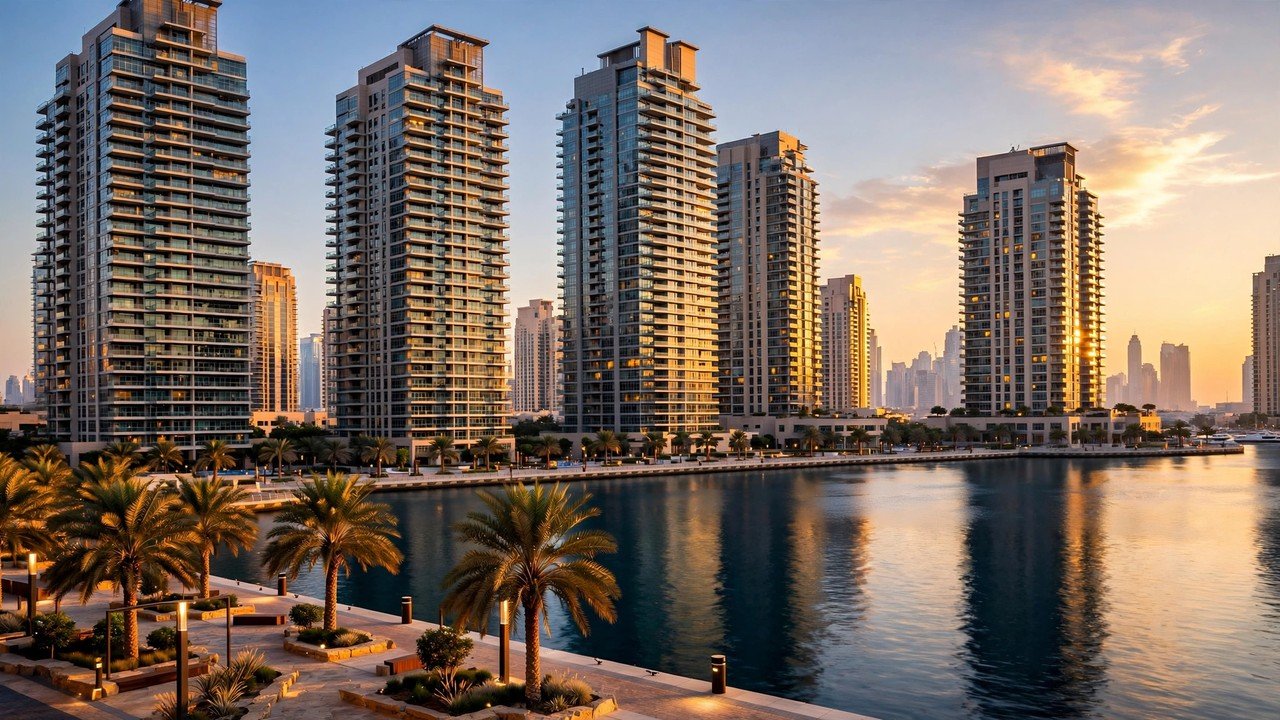
Dubai rental market October 2026 brings news tenants have waited years to hear: asking rents are falling across most of Dubai’s major residential communities, and renters finally have room to negotiate. If your lease is up for renewal, or you are thinking about moving, the numbers are genuinely on your side for the first time in a long while. Fresh data from Property Finder, fäm Properties and Savills all point the same way: more homes available, landlords competing for tenants, and asking rents sliding neighbourhood by neighbourhood. What the Dubai rental market October 2026 numbers show Property Finder compared median advertised annual rents in Q3 2026 with the same quarter of 2025, and apartment asking rents had fallen in nine out of ten major communities. Villa asking rents were down in eight out of ten. Meanwhile, rental activity is climbing. fäm Properties reported 48,639 rental contracts registered across Dubai’s freehold areas in September, up 22.6% on August. For the first nine months of 2026, 298,984 contracts were recorded, 6.8% more than the same period in 2025, a year that set an all-time record of 377,926. Savills counted 181,900 rental transactions in Q3, up 16% on Q2, with new leases at 44% of the total. More people are renting, and more homes are available to rent. That combination is what pushes asking rents down. Where rents fell the most Downtown Dubai saw the biggest drop in apartment asking rents, down 22% year on year. Dubai Marina followed with a 16.13% decline, then Meydan at 13.33%, Business Bay at 12.5% and Jumeirah Village Circle at 10%. Dubai Hills Estate was the only apartment community in the comparison that recorded no change. On the villa side, Arabian Ranches 3 recorded the largest fall, with asking rents down 18.92%. Mohammed Bin Rashid City was down 15%, Dubai South 12.45% and Palm Jumeirah 10.55%. One exception stood out: asking rents in Al Furjan actually rose 15%. Why rents are dropping now Three things are happening at once. First, supply: thousands of new homes completed over the past two years are now reaching the rental market, with more due in 2027 and 2028. Second, the sales market has cooled from its 2025 peak: Q3 2026 saw 37,429 sales worth AED 92.9 billion. Third, renters have more choice than they have had in years, and choice is bargaining power. That is the story of the Dubai rental market October 2026 in one line: supply up, choice up, asking rents down. Keep some perspective. Rents rose steeply for years before this. This is a correction from very high levels, not a collapse. Well-located homes are still letting quickly; landlords just can no longer name their price and expect a queue. What this means for tenants If your renewal is due in the next few months, do three things. First, check what similar units in your building and community are actually advertised at right now, not what your landlord says the market is. Second, start the conversation early, at least 60 days before renewal, and come with the numbers. In the Dubai rental market October 2026, a polite, evidence-based negotiation is normal, not rude. Third, be willing to look around. New leases made up 44% of Q3 rental deals, a sign that plenty of tenants are moving rather than accepting a renewal increase. If your current landlord will not move, another building probably will. What this means for landlords For landlords, the message in the Dubai rental market October 2026 is blunt: lowering the price alone may not be enough. That is the advice of Property Finder’s chief revenue officer Cherif Sleiman, who says that with this much choice in the market, the quality of a listing, how visible it is and how quickly the landlord responds now matter more than ever. Practically, that means pricing your unit against today’s asking rents, not last year’s. Photograph it properly, reply to enquiries the same day, and consider what your tenant values: a two-year lease, cheques spread across the year, or a small upgrade can beat holding out for an extra AED 5,000 and leaving the unit empty for two months. What this means for you Whether you rent or let, the Dubai rental market October 2026 rewards the same behaviour: know the numbers, move early, and negotiate on facts rather than feelings. Tenants should treat renewal season as a genuine opportunity to upgrade their home or cut their rent. Landlords should treat it as a prompt to price realistically and compete on service, not just square footage. Dubai rental market October 2026: FAQs Are Dubai rents actually falling in 2026? Yes, on asking rents. Property Finder found apartment asking rents down in nine of ten major communities and villa asking rents down in eight of ten, comparing Q3 2026 with Q3 2025. Is it a good time to rent in Dubai right now? For tenants, yes. More choice, falling asking rents, and landlords open to negotiation make this one of the best windows for renters in several years. Start looking 60 to 90 days before you need to move. Will Dubai rents keep falling? Nobody can promise that. More new homes are due in 2027 and 2028, which points to continued pressure, but strong population growth and demand keep a floor under well-located homes. The Dubai rental market October 2026 is a tenants’ market for the first time in years, and a reality check for landlords. Check the numbers for your own community, start conversations early, and make decisions on today’s data, not last year’s headlines.

Dubai Property Market October 2026: What’s Really Happening
The numbers for the Dubai property market October 2026 tell two stories at once, and both are true. On one hand, the third quarter closed with roughly AED 93 billion in sales across more than 37,000 transactions. Off-plan launches kept dominating, rentals are steaming toward an all-time annual record, and nine-month sales value hit AED 574 billion — the second-best start to any year on record. On the other hand, September’s transaction count was down 44% compared to September last year. Prices have slipped a few percent. And S&P Global Ratings is openly talking about a moderate price correction stretching into 2027, driven by regional tensions and a wave of new supply. So which is it — boom or cooldown? If you’re buying, selling, or just watching, here’s an honest read of the Dubai property market (October 2026). Q3 2026 by the numbers Let’s start with what actually changed hands. Data from fäm Properties puts Q3 2026 at 37,429 sales worth AED 92.9 billion. Developers did the heavy lifting: 25,441 primary-market sales worth AED 52.6 billion, against 11,988 resales worth AED 40.3 billion. Off-plan remains the engine room. Across the quarter, off-plan deals topped AED 41 billion, and Dubai South led primary-market locations for the seventh month in a row — 737 off-plan transactions worth nearly a billion dirhams in September alone. September itself was busy in absolute terms: 9,055 apartment sales, 1,428 villa sales, and plot deals up nearly 29% month-on-month. But the year-on-year comparison is where the cooling shows. September 2026 saw 44% fewer transactions and 46% less sales value than the record-breaking September of 2025. Context matters here. 2025 was exceptional — arguably the strongest year Dubai real estate has ever seen. What we’re seeing now looks less like a collapse and more like gravity reasserting itself. The price question: correction, not crash This is the part everyone asks about. Are prices falling? Honestly: a little, in some segments. ValuStrat data shows citywide prices down about 3% year-on-year in August, with apartments softer than villas. Property Index puts September down 4% year-on-year. S&P Global Ratings, citing industry data, estimates prices have slipped somewhere between 5% and 15% since the end of 2025 depending on segment — and expects a gradual correction rather than a sharp fall. Emaar’s Mohamed Alabbar has publicly predicted a 5–10% adjustment across the wider market. Two forces are doing the pushing. First, geopolitics: S&P notes regional tensions have made some buyers more cautious, hitting transaction volumes since March. Second, supply: a heavy pipeline of new completions due in 2027 and 2028 will test how much demand the Dubai property market can absorb. But — and this matters — the correction S&P describes is moderate and orderly, not 2009 all over again. Their base case even allows that if regional tensions ease in 2027, Dubai’s fundamentals could stabilize prices despite the new supply. Rentals are the real story of 2026 While sales volumes wobble, the rental market is quietly having a monster year. September saw 48,639 rental contracts registered — up 22.6% in a single month. New contracts jumped 25.6% year-on-year. Across the first nine months of 2026, nearly 299,000 rental contracts were registered, up 6.8% on the same period last year — and last year set the all-time record. At this pace, 2026 will take the crown. Here’s the interesting tension: rents themselves are softening even as contract volumes surge. Average apartment rents are down about 4% year-on-year; villa rents down more sharply. More supply plus more tenants moving within the market equals high activity with slightly softer pricing. For tenants, that’s relief. For landlords, it’s a signal to price realistically. Cash is still king One number keeps jumping out: just over 67% of secondary-market deals in Q3 were done in cash. No mortgage, no financing — straight cash. That tells you who is still buying in the Dubai property market, October 2026: serious, liquid investors and end users, many of them international. It also explains why the market feels more “measured” than panicked. Cash buyers don’t get margin calls. At the same time, mortgage activity is actually growing — registrations up 6.5% year-on-year in September, mortgage value up nearly 38%. End users are financing; investors are paying cash. Two different buyer pools, both active. Luxury doesn’t read the headlines The top end of the market continues to operate in its own universe. September’s priciest deals included a villa at AED 260 million and a Palm Jumeirah apartment at AED 71 million. A 41,000 sq ft plot in Dubai Hills Estate sold for AED 100 million — the most expensive single residential land deal the community has ever seen. Ultra-prime scarcity is real: only a handful of such plots exist, and demand from global wealth keeps arriving regardless of quarterly wobbles. What should you actually do? If you’re a buyer: this is the most buyer-friendly window the Dubai property market, October 2026, has offered in years. More choice, softer prices, motivated sellers in some segments — but be selective. Established communities with real rental demand are holding up better than speculative fringe stock. And get your financing pre-approved; mortgage activity is rising for a reason. If you’re an investor: yields are the story now, not flipping. With rents high by historic standards and purchase prices softening slightly, gross yields in mid-market apartments look increasingly attractive. This echoes why investors keep buying in Dubai even when headlines turn cautious: run the numbers on service charges and realistic occupancy, not brochure promises. If you’re selling: price to the market, not to last year’s headlines. Well-priced, well-presented units are still moving — overpriced listings are sitting. With prices falling modestly in some segments, honest pricing is what gets deals done. The bottom line: Dubai property market October 2026 The Dubai property market, October 2026, isn’t booming and it isn’t crashing. It’s normalizing — from an extraordinary 2025 toward something more sustainable. Volumes are down, prices are adjusting modestly, rentals are breaking records, and cash-rich buyers

Dubai Real Estate Market 2026: Record Money, Record Sales, and a Few Warning Signs
The Dubai real estate market is having a loud year. Foreign money is pouring in, home sales keep breaking records, and rents are climbing fast. But not every signal points up. A few analysts see cracks forming. Here’s what the 2026 numbers actually say, and what they mean if you’re thinking about buying, renting, or investing. Foreign investment hit $40 billion in one quarter In the first quarter of 2026, Dubai property pulled in $40.4 billion in foreign investment. That’s up 26% from a year earlier. Around 29,312 new investors entered the market for the first time. That inflow tells a simple story. Buyers outside the UAE still see Dubai as a safe place to park cash. Tax-free ownership, long-term visas, and a stable currency keep them coming. Home sales keep setting records Ready home sales jumped almost 20% in July. Buyers closed on more than 3,400 finished properties worth about AED9 billion. That was the strongest month since February. Prices moved too. Average property prices rose 9% in the first half of 2026. The luxury end ran even hotter. Dubai logged 296 home sales above $10 million in that period, worth a combined $5.1 billion. Who’s buying? British buyers led the pack this year, ahead of Indian and Australian buyers. Apartments drove most of the deals, and Dubai Marina stayed out front. Rents are climbing fast too This isn’t only a sales story. Dubai recorded 214,445 rental contracts in the first seven months of 2026. That pace puts the market on track for a new annual record. For renters, that means less room to haggle. For landlords, it means steady demand and rising yields. If you rent in a popular area, expect your next renewal to cost more. Who’s building what The developer split is worth knowing before you buy off-plan. Off-plan still drives most transactions by count. The second quarter cooled a little compared with the first, but the segment stayed busy. The warning signs nobody should ignore Now the part the headlines skip. Not everyone thinks the boom holds. Prices climbed roughly 60% between 2022 and early 2025. That’s a steep run, and steep runs rarely last forever. Some analysts even ask whether Dubai property prices are set to cool. Fitch Ratings has flagged the risk of a correction. It named corporate real estate as the most exposed part of the economy if regional tensions spill over. Goldman Sachs analysts also spotted a soft patch earlier in the year. They reported transaction volumes down 37% year-on-year in early March. Volumes bounced back after that, but the wobble was real. So the market is strong. It’s just not risk-free. Anyone who remembers 2009 knows Dubai property can turn quickly. What this means for buyers and investors Here’s the practical read on the Dubai real estate market right now. If you’re buying to live, look at ready homes in areas with real demand, like the Marina or the waterfront communities. You’ll pay more, but you skip off-plan delivery risk. If you’re investing, the rental math looks good. Record contract volumes support yields, which is a big part of why investors keep buying in Dubai. Just don’t assume prices only go up. Mortgage rules are clear. First-time buyers can borrow up to 80% on a ready home. Investors and second-home buyers usually cap out at 60%. Keep your paperwork clean, because lenders are checking documents more carefully than they used to. One cost people forget: service charges. High-end towers can bill AED15 to AED30 per square foot a year for maintenance, pools, and security. On a big apartment, that adds up fast and eats into your rental yield. Ask for the exact figure before you sign, not after. The Dubai real estate market: quick 2026 snapshot Here is the Dubai real estate market in five quick numbers for 2026. Metric 2026 figure Foreign investment (Q1) $40.4 billion, up 26% Ready home sales (July) 3,400+ homes, AED9 billion Price growth (H1) 9% Rental contracts (7 months) 214,445 Luxury sales over $10m (H1) 296 deals, $5.1 billion The bottom line The Dubai real estate market in 2026 rewards people who move with a plan. The numbers are strong, the money is real, and demand runs deep across sales and rentals. But the fast climb since 2022 leaves less margin for error. Buy in good areas. Check the developer’s track record. Don’t stretch your budget on the belief that prices can only rise. Strong markets still correct, and this one has run hard. Dubai real estate market FAQs A few quick answers to the questions buyers and investors ask most about the Dubai real estate market in 2026. Is 2026 a good time to buy in the Dubai real estate market? It can be, if you buy with a plan. Sales and rents are both at record levels, so demand is strong. Just pick good areas, check the developer’s track record, and don’t overpay on the assumption that prices only rise. Are Dubai property prices going to drop? No one knows for sure. Prices rose about 60% from 2022 to early 2025, and Fitch has flagged correction risk. Most analysts still see steady demand, but a slower stretch or a small dip is possible after such a fast climb. How much can I borrow to buy a home in Dubai? First-time buyers can usually borrow up to 80% on a ready home. Investors and second-home buyers cap out around 60%. Lenders check paperwork closely now, so keep your documents clean and ready. Which areas are best in the Dubai real estate market right now? For living, ready homes in high-demand spots like Dubai Marina and the waterfront communities are safe picks. For investing, look where rental demand is deep and contract volumes are high, so your yield holds up.