
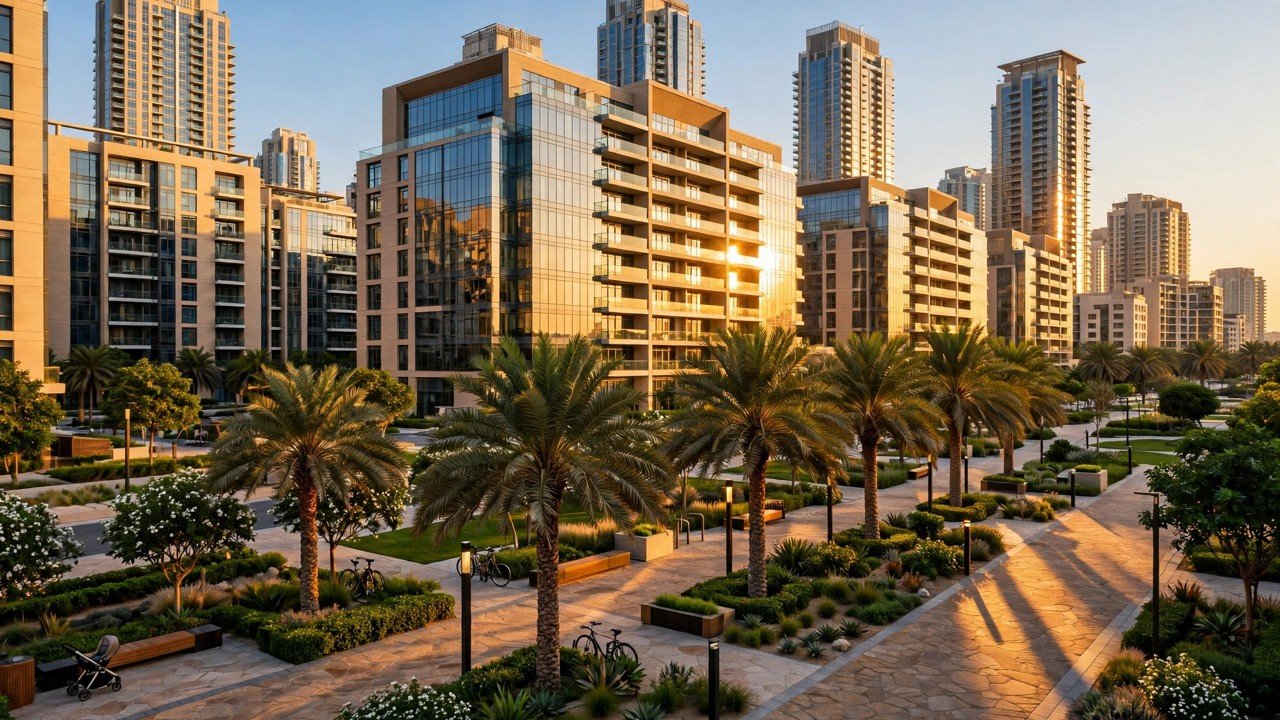
If you rent in Dubai, the rent vs buy Dubai November 2026 question deserves a serious look this month. For the first time in years, the numbers are moving in the tenant’s favour: rents are easing, more homes are being handed over than ever, and the gap between your annual rent and a mortgage payment on a comparable home is smaller than most tenants expect. This is not a market turning against owners. It is a market finding its level after a record run — and for long-term tenants, that is genuinely good news. Why Dubai rents are easing now The shift is clear in the rental data. Cavendish Maxwell found that 21.4% of rental transactions in the third quarter of 2026 recorded a lower rent than the previous contract, up from just 4.8% in the first quarter. Another 38.7% renewed at exactly the same rent, while the share recording an increase fell to 40%, down from 59.4%. In plain terms, one tenant in five now pays less than before. Average rents stood at Dh77.3 per square foot a year in September, up only 5.5% year on year — half the growth of a year earlier — and CBRE puts rental rates about 7% lower than a year ago. The cause is supply: about 38,000 homes were delivered between January and September 2026, up 41.4% on the same period of 2025. New contracts rose 18.2% to 77,700 while renewals fell 10.6% — tenants are moving rather than accepting increases. The rent vs buy Dubai November 2026 maths That is the heart of the rent vs buy Dubai November 2026 decision: what does your rent actually buy you if you owned instead? PropertyIndex put the average ready apartment at AED 1.73 million in October 2026, with a median of AED 1.1 million. A typical apartment in Dubai Sports City is worth about AED 1 million and one in Dubai Silicon Oasis about AED 670,000, against a citywide average of AED 1.78 million. Average sales prices stood at Dh1,644 per square foot in September. Now compare that with what you pay to rent. Gross rental yields averaged 6.6% for apartments in Q3, according to Cavendish Maxwell, and Windmills Group puts average apartment yields higher still, at 7.7%. Gulf News reported on 6 November that many tenants find the gap between annual rent and a monthly mortgage payment smaller than expected. Home loans back that up: about 22,500 in the first half of 2026, up more than 7%. Before you get excited, count the real cost of buying. The Dubai Land Department transfer fee is 4%, an agent typically takes 2%, and mortgage registration and valuation add more — budget roughly 7% on top of the price, plus a 20% deposit. On a median AED 1.1 million apartment, that means about AED 220,000 as a deposit and roughly AED 77,000 in purchase costs before you get the keys. If you do not have that saved, keep renting while you build it — the softer market makes the wait cheaper. Who buying suits — and who should keep renting Buying suits you if Dubai is home for the next five years or more: children in local schools, a long-term residency visa, a stable income, and a deposit already saved. Gulf News reports tenants who have rented for three, five or even eight years are increasingly choosing to buy, with more ready homes to choose from and sellers willing to negotiate. Keep renting if your stay is uncertain, your income could change, or you need flexibility to move for work. There is no shame in it — and right now, the rental market is on your side. Rent-protection firm Takeem says a tenant facing an increase can often save 15% to 20% by moving to a similar home nearby. What this means for you If your tenancy is up for renewal, check the RERA rent index before you agree to anything. Under Decree No. 43 of 2013, the maximum increase depends on how far your rent sits below the average for similar homes, and it only applies if the landlord gives at least 90 days’ notice. In the rent vs buy Dubai November 2026 picture, the affordable end of the market is where the value sits: Sports City, Silicon Oasis, Jumeirah Village Triangle and International City all held or gained value over the past year while prime addresses softened. If you are leaning towards buying, get a mortgage pre-approval before viewing, compare the monthly payment with your current rent on a like-for-like home, and look at ready homes first — ready-home transactions rose 11% on the quarter. For the cash-versus-borrowing comparison, see Dubai cash buyers vs mortgage November 2026; for price levels, Dubai property prices November 2026; and for areas, Dubai property prices by area. Frequently asked questions Are Dubai rents falling in November 2026? Rents are easing rather than collapsing. One in five Q3 rental transactions recorded a lower rent than the previous contract, and CBRE puts rental rates about 7% lower than a year ago. Tenants have more negotiating power than at any point since 2023. Is it cheaper to buy than rent in Dubai now? On the rent vs buy Dubai November 2026 numbers, it can be — for long-term residents with a deposit saved. With a median ready apartment at AED 1.1 million and yields around 6.6% to 7.7%, the monthly mortgage payment on a comparable home is often close to the rent. But buying adds roughly 7% in purchase costs plus a 20% deposit, so the answer depends on how long you will stay. How much deposit do I need to buy in Dubai? Most buyers need a 20% deposit, plus about 7% for the DLD transfer fee, agent fee and mortgage costs. On a median AED 1.1 million apartment, that is roughly AED 220,000 deposit and AED 77,000 in costs. Should I wait for prices to fall further? Prices have already eased back to their April 2025 level,
Dubai Cash vs Mortgage Buyers: What Q3 2026 Shows
If you are buying in Dubai right now, one question shapes almost every other decision: do you pay cash, or do you take a mortgage? The Dubai cash buyers vs mortgage November 2026 figures show that question is shifting. More buyers are paying cash, yet mortgages still fund most deals at the brokerages that track them closely. Neither route is automatically smarter. The right choice depends on your cash reserves, your monthly income, and how long you plan to hold the property. Dubai cash buyers vs mortgage November 2026: the numbers Data from property brokerage Betterhomes showed that cash purchases accounted for 44 per cent of its residential sales in the third quarter of 2026, up from 36 per cent in the second quarter. Mortgage-backed purchases therefore fell to 56 per cent in Q3, down from 64 per cent in Q2, although that share remained above the 50 per cent recorded in Q1. So the Dubai cash buyers vs mortgage November 2026 balance tilted toward cash, but borrowing still led. The shift came as borrowing costs faced renewed upward pressure. The Central Bank of the UAE raised its Base Rate from 3.65 per cent to 3.90 per cent, effective 17 September 2026, and Khaleej Times reported that banks are likely to raise the stress-test rates used to assess mortgage eligibility. A tougher stress test can reduce the amount you qualify to borrow, even if your mortgage rate barely moves. Keep the two markets separate, though. Betterhomes figures describe its own sales. Across Dubai as a whole, the cash share is much higher, largely because off-plan payment plans let buyers spread payments without a bank mortgage: Hamptons research put it at about 83 per cent in December 2025 and about 76 per cent by March 2026. For ready homes, Reidin’s August 2026 analysis found 47 per cent mortgage-backed and 53 per cent without mortgage financing. Do not blend these counts into one number. Why the cash share rose Interest rates are only part of the story. Dubai has a deep pool of buyers who can complete without bank finance, giving the market resilience when borrowing costs rise. Off-plan structure matters too: developer payment plans stretching across construction mean many buyers never need a traditional mortgage, so they show up as cash buyers even though they pay in stages. For mortgage borrowers in the Dubai cash buyers vs mortgage November 2026 picture, lender appetite has stayed healthy: mortgage adviser Lomond said banks are still competing for business, for resident and non-resident buyers alike. What this means if you need a mortgage Get your financing sorted before you fall in love with a property. Betterhomes noted that buyers who had not reached the final offer letter stage by the end of October could receive revised mortgage offers. If your capacity is reassessed at a higher stress-test rate, the home you could afford in August may be out of reach in November. Understand fixed versus variable too. Fixed-rate borrowers are generally protected for the fixed period, while variable-rate repayments may move as loans are repriced. Several banks are offering refinancing incentives, including waived fees, for homeowners whose fixed periods have ended. Finally, run the numbers. For a Dh2 million property with a 20 per cent down payment, leaving a Dh1.6 million mortgage over 25 years, indicative monthly repayments would be about Dh10,604 at 6.30 per cent, about Dh9,635 at 5.30 per cent, and about Dh9,113 at 4.74 per cent — a difference of about Dh1,491 a month, or nearly Dh17,900 a year. Those are indicative rates, not a guaranteed offer. What this means if you can pay cash For the Dubai cash buyers vs mortgage November 2026 reader who can pay cash, the advantages are real. You can move quickly, you face fewer conditions, and sellers often prefer a clean offer. In a more selective market, where buyers are placing greater emphasis on pricing and location, a fast cash offer can be the difference between winning a home and losing it. But cash is not free money. Tying up everything in one property leaves nothing for service charges, furnishing, a vacant period, or an unexpected repair. Before you pay cash, ask whether you would still be comfortable if the property sat empty for three months. A smaller, affordable mortgage sometimes beats an all-cash purchase that leaves you with no buffer. Nor does a cash offer automatically earn a big discount. In prime areas, sellers with a good property can wait for the right price. Your leverage comes from speed and certainty. Check what similar homes actually sold for, not just what they were listed at, and learn what different areas cost before negotiating. What this means for you Deciding the Dubai cash buyers vs mortgage November 2026 question for yourself starts with your own numbers. If you have strong cash reserves and a stable income, compare the total cost of borrowing against the return you could earn by keeping that cash invested elsewhere. If borrowing is cheap relative to your other options, a mortgage can make sense even when you could pay cash. If it would stretch your monthly budget, cash or a larger deposit gives you more control. Talk to a mortgage adviser early, not after you have made an offer. Ask about the stress-test rate, the fixed period, and what happens when it ends. Whichever route you choose, buy in a location with real demand, check the service charges, and think about resale from day one. Dubai’s top-end market has shown that well-located, completed homes keep attracting buyers even when overall volumes cool. The Dubai cash buyers vs mortgage November 2026 picture is, in the end, a healthy one. Buyers have options, banks are still lending, and cash buyers add stability when rates rise. Pick the funding route that leaves you comfortable every month, with a buffer intact, in a home you can hold for the long term. Frequently asked questions Are most Dubai buyers paying cash now?At Betterhomes, cash was
Dubai Shared Housing Law 2026: 44 Areas Explained
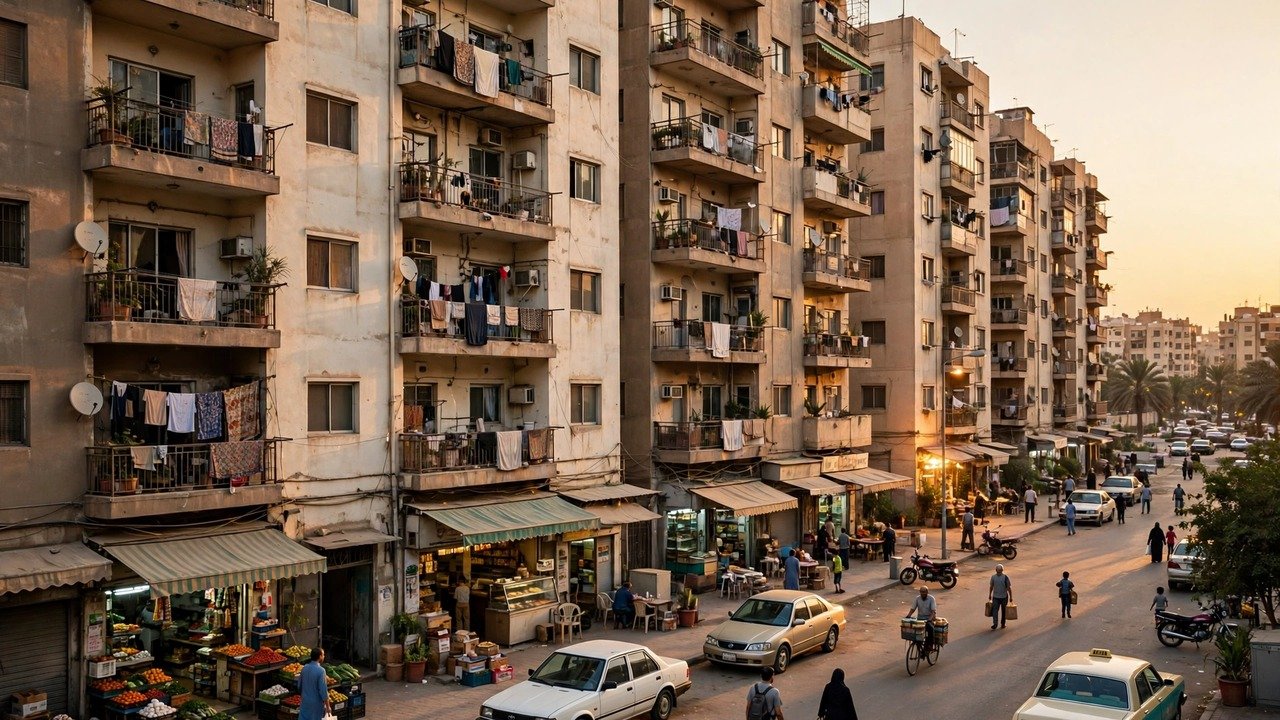
If you rent a bed space in Dubai, let rooms in a shared flat, or own a building where people share accommodation, one change matters more than any rent headline this autumn: the Dubai shared housing law 2026. Dubai Municipality has now named the areas where shared housing is allowed, set clear space and safety standards, and given owners a deadline to bring existing buildings into line. Here is what the law says, in plain language, and what to check before you sign, let, or invest. Dubai shared housing law 2026: what changed The Dubai shared housing law 2026 is Law No. 4 of 2026, regulating the occupancy and management of shared housing in Dubai. It came into effect on 8 September 2026, and Dubai Municipality followed it with a Planning and Building Requirements Guide for Shared Housing and Permitted Areas. The aim is safer, less crowded shared homes, with clear rights for owners and residents. Shared housing used to sit in a grey area: bed spaces and shared flats existed across older neighbourhoods, but the rules were patchy. The Dubai shared housing law 2026 moves that market into a formal system: the property, the operator, the location, the resident category and the occupancy level must all comply. For a tenant, a legal home should now meet a real standard. For an owner, a compliant building is a defensible asset, while an unregistered one is a risk. The 44+ approved areas, in three groups Dubai Municipality has identified more than 44 areas where buildings may be used for shared housing, and Gulf News reported the approved-area list in full on 8 October 2026. The areas fall into three groups. First, shared housing is permitted throughout these areas: Al Ras, Al Dhagata (Deira), Al Bateen, Sabkha, Eyal Nasser, Al Murar, Naif, Al Rigga, Al Muteena, Al Muraqqabat, Riqqa Al Bateen near Dubai Creek, Hor Al Anz, Al Waheeda in Deira, Al Rashidiya, Al Nahda 1, Al Qusais, Al Twar 5, Al Nahda 2, Muhaisnah 4, Souq Kabeer, Umm Hurair 1 and 2, Al Raffa, Karama, Oud Metha, Jumeirah 1, Al Badaa, Al Barsha 1 and Al Warqa 1. Second, shared housing is allowed only in designated parts of these areas: Abu Hail, Al Baraha, Al Hamriya, Mankhool, Al Jaffiliya, Al Hudaibiya and Al Satwa. If your building sits in one of these, do not assume it qualifies — the exact plot and its planning status decide. Third, on Sheikh Zayed Road, Jumeirah Road, Al Wasl Road and Baniyas Road, individual shared accommodation is not permitted — shared housing there is restricted to families. More areas may be added later, so check the current guide rather than an October list. Space, privacy and who can let shared housing The Dubai shared housing law 2026 sets standards that are easy to check on a viewing. Bedrooms must provide a minimum of five square metres of space per person, according to Time Out Dubai’s report on the new standards. Family accommodation must give each family member a separate bedroom with an en-suite bathroom. A shared unit must be allocated to either families or individuals — families and unrelated individuals cannot share the same unit. The law also covers shared facilities — kitchens, sanitary facilities, and areas for dining, recreation, laundry and drying — with standards set by category and occupant numbers. A compliant home should not feel like a corridor of partitioned beds with one bathroom for a dozen people. If it does, walk away, however cheap the rent looks. Only a property owner or a licensed establishment may rent out shared housing. An authorised operator may manage it on an owner’s behalf, or lease it and sublet to residents in line with the law. Permits come through the Build in Dubai platform. And being in an approved area is not, on its own, permission: the property must still meet planning, building and occupancy requirements and hold the permit first. The deadline owners cannot ignore Owners of existing shared-housing buildings, and property management and leasing companies, have one year from 8 September 2026 to regularise their properties and bring them into compliance — a deadline of 8 September 2027. That window also covers fixing existing building violations, unauthorised changes and anything that poses a risk to public safety. If you own in an approved area, treat the next few months as a compliance project. Confirm the permit position, check bedroom sizes against the five-square-metre rule, confirm whether your building is fully permitted or only in a designated part, and settle the family-versus-individual category for each unit. A building compliant on 8 September 2027 will be easier to let and to sell than one still waiting to be regularised. What this means for you For tenants, the Dubai shared housing law 2026 is good news if you use it. Before you pay, ask: is this building in an approved area or designated part, does it hold a shared-housing permit, and does your bedroom give you at least five square metres? Get the answers in writing. For owners and investors, the law separates two kinds of shared housing. Compliant, permitted buildings in approved areas — think Karama, Al Rigga, Al Nahda and Al Barsha 1 — now have a clear legal footing, which should support steadier occupancy and a cleaner exit when you sell. Unpermitted partitions in the wrong location are now a liability, not a yield trick. Price any purchase on the compliant rent, not on what a crowded, unpermitted layout used to produce, and compare it with what your budget actually buys across the city before you commit. Shared housing is one regulated corner of a much larger market. The Dubai luxury property market Q3 2026 showed a selective top end, and the choice between ready homes and off-plan homes still comes down to your timeline and the developer’s delivery record. Shared housing is not a shortcut around those basics — it is a specialist strategy with specialist rules. Frequently asked questions What

Dubai Ready Homes vs Off-Plan 2026: What Q3 Buyers Chose
For years, the default move in Dubai was off-plan: buy early, pay in instalments, watch the value climb before handover. That playbook still works — but something shifted in Q3 2026. Dubai ready homes vs off-plan 2026 has become a genuine debate, because buyers started splitting their bets: sales of completed homes jumped 16% on the previous quarter, while off-plan slowed as developers launched fewer projects. Buyers are not leaving the market. They are getting pickier about what they buy — and about when they get the keys. What the Q3 2026 numbers actually show According to betterhomes’ Q3 residential report, sales of ready homes rose 16% compared with Q2. Secondary transactions hit 10,055 in the quarter, lifting their share of all residential sales from 24% to 29%. The value story is even stronger: ready homes accounted for 37% of residential sales value, up from 30%, worth AED 27.1 billion. Total sales were broadly flat at 34,615 — a shift in what people bought, not a shutdown. Savills tells a similar story from a different angle. The value of ready-property transactions rose from AED 21.3 billion in Q2 to AED 25.1 billion in Q3, an increase of about 18%. Overall volumes dipped, but Savills says the slowdown sat mainly in the off-plan segment — and it came from fewer launches, not from buyers walking away. And off-plan is far from dead. Data from fäm Properties puts total Q3 transactions at 37,429 worth AED 92.9 billion, with primary sales from developers at 25,441 deals (AED 52.6 billion) against 11,988 resales (AED 40.3 billion). Off-plan still leads — but the challenger is gaining fast. Why ready homes are winning right now Three reasons explain why the Dubai ready homes vs off-plan 2026 balance is tilting toward completed homes. First, certainty. A ready home is finished: you can walk through it, check the view, and see the actual community — not a brochure render. No construction risk, no handover delay. Second, income from day one. A completed home can be lived in or rented out immediately — and with asking rents easing across many communities, landlords want cash flow now rather than promises later. Third, negotiation power. With more completed stock on the market, buyers can compare real options and negotiate on price, payment terms, and handover dates. That is a very different conversation from a launch-day queue. There is also the money trail. More than two-thirds of secondary deals in Q3 were paid in cash, which tells you serious buyers are moving quickly on finished homes they can verify with their own eyes. That is the core of the Dubai ready homes vs off-plan 2026 question: certainty versus timing. Why off-plan still makes sense for many buyers None of this means off-plan has lost its place in the Dubai ready homes vs off-plan 2026 debate. Payment plans remain the biggest draw: you can secure a brand-new home with staged payments instead of the full price up front. You also get the newest product — the latest layouts, amenities, and energy-efficient designs. Demand at the top end is still fierce: Imtiaz’s AED 1.5 billion RAW District 2 sold out on launch day in Q3. Financing is catching up too — Mashreq now offers off-plan home financing across selected Expo City Dubai projects, covering 3,000+ units under development. Meanwhile the pipeline keeps delivering. In the first half of 2026, 104 projects worth more than AED 111 billion were completed, delivering 24,537 new homes. For buyers who bought off-plan a few years ago, those handovers are the payoff. Dubai ready homes vs off-plan 2026: what this means for you So how should you choose? It comes down to what you need the property to do. Moving to Dubai soon? A ready property wins on certainty: known community, service charges, and commute, and you move in on your timeline. Want rental income? A ready home pays from day one — but check actual achieved rents in the same building, not the brochure’s promise. Have time and a growth target? Off-plan can still deliver — if you pick right. Check the developer’s handover record, the payment plan against your cash flow, escrow protection, and comparable ready prices nearby. Never buy a launch just because the queue is long. The Dubai ready homes vs off-plan 2026 decision is not about which is “better” in the abstract. Compare like with like: a ready two-bedroom and an off-plan two-bedroom next door differ in price per square foot, service charges, handover risk, and when the income starts. Dubai ready homes vs off-plan 2026: your questions answered Is off-plan dead in Dubai in 2026? No. Developers still sold more than twice as many primary units as resales in Q3; off-plan slowed because fewer projects launched. Are ready homes cheaper than off-plan right now? Not automatically. Ready homes can carry a premium for certainty and immediate income; off-plan can offer a lower entry price. Compare price per square foot in the same area, including service charges. Which option gives better rental income? A ready home pays rent from day one; an off-plan unit pays nothing until handover. If income timing matters, ready wins. What should I check before buying off-plan? The developer’s delivery record, escrow account, payment plan, handover penalties, and what comparable ready homes nearby sell for. If those answers are vague, walk away. The market in late 2026 is neither crash nor boom. It is a market where buyers have real choice again — and they are using it. Dubai ready homes vs off-plan 2026 is not a bet on the market; it is a bet on your own timeline. Verify the numbers, visit the property or the site, and buy for your own timeline, not someone else’s launch-day urgency. If you want help comparing a ready home against an off-plan launch in the same community, book a consultation and I will shortlist options that fit your budget and goals.

Why Invest in Dubai Real Estate?
If you are asking why invest in Dubai, you are not alone. Investors from around the world are moving their capital to this fast growing city. Dubai offers strong returns, zero property tax, and a secure investment climate. Let’s break down the real reasons. 1. Tax Free Investment Environment One of the biggest reasons why invest in Dubai is its tax policy. Dubai does not charge annual property tax. There is no capital gains tax on property sales. Rental income is also tax free. This means you keep more of your profits. For global investors, this makes a huge difference over time. 2. High Rental Yields Dubai offers some of the highest rental yields in the world. Average returns often range between 6 percent and 9 percent, depending on the area and property type. In cities like London or New York, yields are much lower. If your goal is strong cash flow, this answers the question of why invest in Dubai clearly. 3. Strong Return on Investment Dubai property prices are still competitive compared to other global cities. At the same time, demand keeps growing. This creates room for capital appreciation. Investors benefit from both rental income and property value growth. When you combine tax advantages with high yields, the overall return becomes very attractive. 4. Safe and Stable City Safety matters when you invest abroad. Dubai ranks among the safest cities in the world. Crime rates are low. The government maintains strict laws and strong security systems. Political stability also adds confidence. Investors feel secure placing long term capital in Dubai’s real estate market. 5. Booming Economy Another key reason why invest in Dubai is its strong economy. Dubai does not rely only on oil. It has built powerful sectors such as tourism, trade, finance, and technology. Major global companies operate here. New businesses open every year. A growing economy supports job creation, which increases housing demand. 6. Investment Visa Opportunities Dubai offers residency visas linked to property investment. Buyers who meet certain investment thresholds can qualify for long term visas. This gives investors and their families the right to live in the UAE. For many people, this is more than an investment. It is a lifestyle upgrade. 7. Strategic Global Location Dubai sits between Europe, Asia, and Africa. It serves as a global travel hub. Millions of passengers pass through Dubai every year. This strategic location attracts businesses and entrepreneurs. More business activity leads to higher housing demand. That demand supports rental income and property prices. 8. Freehold Ownership for Foreigners Foreign investors can buy freehold property in designated areas. This gives full ownership rights. You can sell, lease, or pass the property to your heirs. Clear ownership laws give international buyers confidence. You control your asset without complicated restrictions. 9. Strong Legal Framework and Investor Protection Dubai has built a regulated real estate market. Authorities such as the Dubai Land Department and RERA oversee transactions and protect buyers. Escrow accounts protect off plan buyers. Developers must follow strict rules. This reduces risk and increases transparency. A regulated system answers an important part of why invest in Dubai. Investors want security, and Dubai provides it. 10. Dubai vs Other Global Real Estate Markets When you compare Dubai with cities like London, Singapore, or New York, the advantages become clear. Dubai offers higher rental yields. It has no annual property tax. Entry prices are still competitive. Many global cities face heavy taxes and slower growth. Dubai continues to expand with new infrastructure, tourism projects, and business zones. Final Thoughts So, why invest in Dubai? The answer is simple. You get tax free income, high rental yields, strong capital growth potential, and a safe environment. You also gain access to a global business hub with investor friendly policies.