
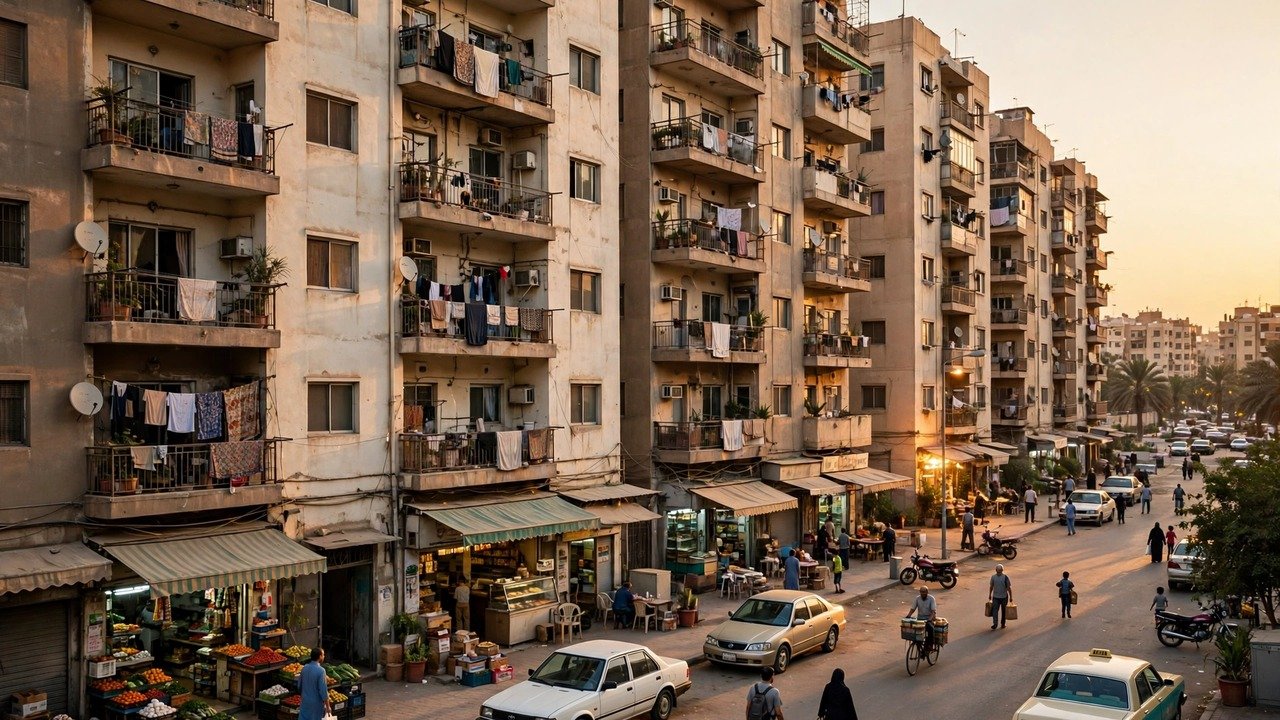
If you rent a bed space in Dubai, let rooms in a shared flat, or own a building where people share accommodation, one change matters more than any rent headline this autumn: the Dubai shared housing law 2026. Dubai Municipality has now named the areas where shared housing is allowed, set clear space and safety standards, and given owners a deadline to bring existing buildings into line. Here is what the law says, in plain language, and what to check before you sign, let, or invest.

Dubai shared housing law 2026: what changed
The Dubai shared housing law 2026 is Law No. 4 of 2026, regulating the occupancy and management of shared housing in Dubai. It came into effect on 8 September 2026, and Dubai Municipality followed it with a Planning and Building Requirements Guide for Shared Housing and Permitted Areas. The aim is safer, less crowded shared homes, with clear rights for owners and residents.
Shared housing used to sit in a grey area: bed spaces and shared flats existed across older neighbourhoods, but the rules were patchy. The Dubai shared housing law 2026 moves that market into a formal system: the property, the operator, the location, the resident category and the occupancy level must all comply. For a tenant, a legal home should now meet a real standard. For an owner, a compliant building is a defensible asset, while an unregistered one is a risk.
The 44+ approved areas, in three groups
Dubai Municipality has identified more than 44 areas where buildings may be used for shared housing, and Gulf News reported the approved-area list in full on 8 October 2026. The areas fall into three groups.
First, shared housing is permitted throughout these areas: Al Ras, Al Dhagata (Deira), Al Bateen, Sabkha, Eyal Nasser, Al Murar, Naif, Al Rigga, Al Muteena, Al Muraqqabat, Riqqa Al Bateen near Dubai Creek, Hor Al Anz, Al Waheeda in Deira, Al Rashidiya, Al Nahda 1, Al Qusais, Al Twar 5, Al Nahda 2, Muhaisnah 4, Souq Kabeer, Umm Hurair 1 and 2, Al Raffa, Karama, Oud Metha, Jumeirah 1, Al Badaa, Al Barsha 1 and Al Warqa 1.
Second, shared housing is allowed only in designated parts of these areas: Abu Hail, Al Baraha, Al Hamriya, Mankhool, Al Jaffiliya, Al Hudaibiya and Al Satwa. If your building sits in one of these, do not assume it qualifies — the exact plot and its planning status decide.
Third, on Sheikh Zayed Road, Jumeirah Road, Al Wasl Road and Baniyas Road, individual shared accommodation is not permitted — shared housing there is restricted to families. More areas may be added later, so check the current guide rather than an October list.
Space, privacy and who can let shared housing
The Dubai shared housing law 2026 sets standards that are easy to check on a viewing. Bedrooms must provide a minimum of five square metres of space per person, according to Time Out Dubai’s report on the new standards. Family accommodation must give each family member a separate bedroom with an en-suite bathroom. A shared unit must be allocated to either families or individuals — families and unrelated individuals cannot share the same unit.
The law also covers shared facilities — kitchens, sanitary facilities, and areas for dining, recreation, laundry and drying — with standards set by category and occupant numbers. A compliant home should not feel like a corridor of partitioned beds with one bathroom for a dozen people. If it does, walk away, however cheap the rent looks.
Only a property owner or a licensed establishment may rent out shared housing. An authorised operator may manage it on an owner’s behalf, or lease it and sublet to residents in line with the law. Permits come through the Build in Dubai platform. And being in an approved area is not, on its own, permission: the property must still meet planning, building and occupancy requirements and hold the permit first.
The deadline owners cannot ignore
Owners of existing shared-housing buildings, and property management and leasing companies, have one year from 8 September 2026 to regularise their properties and bring them into compliance — a deadline of 8 September 2027. That window also covers fixing existing building violations, unauthorised changes and anything that poses a risk to public safety.
If you own in an approved area, treat the next few months as a compliance project. Confirm the permit position, check bedroom sizes against the five-square-metre rule, confirm whether your building is fully permitted or only in a designated part, and settle the family-versus-individual category for each unit. A building compliant on 8 September 2027 will be easier to let and to sell than one still waiting to be regularised.
What this means for you
For tenants, the Dubai shared housing law 2026 is good news if you use it. Before you pay, ask: is this building in an approved area or designated part, does it hold a shared-housing permit, and does your bedroom give you at least five square metres? Get the answers in writing.
For owners and investors, the law separates two kinds of shared housing. Compliant, permitted buildings in approved areas — think Karama, Al Rigga, Al Nahda and Al Barsha 1 — now have a clear legal footing, which should support steadier occupancy and a cleaner exit when you sell. Unpermitted partitions in the wrong location are now a liability, not a yield trick. Price any purchase on the compliant rent, not on what a crowded, unpermitted layout used to produce, and compare it with what your budget actually buys across the city before you commit.
Shared housing is one regulated corner of a much larger market. The Dubai luxury property market Q3 2026 showed a selective top end, and the choice between ready homes and off-plan homes still comes down to your timeline and the developer’s delivery record. Shared housing is not a shortcut around those basics — it is a specialist strategy with specialist rules.
Frequently asked questions
What is the Dubai shared housing law 2026?
The Dubai shared housing law 2026 is Law No. 4 of 2026, regulating the occupancy and management of shared housing in Dubai. In effect from 8 September 2026, it sets permit, location, space, safety and operator rules, with a compliance deadline of 8 September 2027 for existing buildings.
Which areas allow shared housing in Dubai?
More than 44 areas are approved, including Karama, Al Rigga, Al Nahda 1 and 2, Al Qusais, Al Barsha 1, Al Warqa 1 and much of old Deira, permitted throughout. Abu Hail, Al Baraha, Al Hamriya, Mankhool, Al Jaffiliya, Al Hudaibiya and Al Satwa are permitted only in designated parts. On Sheikh Zayed Road, Jumeirah Road, Al Wasl Road and Baniyas Road, shared housing is restricted to families.
How much bedroom space must each person get?
At least five square metres of bedroom space per person. Family accommodation must provide each family member with a separate bedroom and en-suite bathroom, and families and unrelated individuals cannot share the same unit.
Can I convert any flat in an approved area into shared housing?
No. The area designation alone is not permission. The property must meet planning, building and occupancy requirements, hold the necessary permit through the Build in Dubai platform, and be let only by the owner or a licensed establishment.